
Product
New Year. Total Control. Why Continuous Group Reporting Is the Smartest Move in 2026
Sumledger
The new year is the ideal time to rethink group reporting. Annual reporting shows the past, but continuous group reporting provides real-time insight, automation, and control throughout the year. With consistent structures and always-ready numbers, finance teams reduce risk, save time, and make better decisions from day one.

Happy New Year!A new year is not just a reset of calendars and budgets. It is a reset of expectations.
For group finance teams, this is the moment to decide whether reporting will remain a retrospective exercise or become a source of continuous insight.
A new year is more than new budgets and fresh targets.It is a reset.
Yet many groups start the year the same way they ended the last one.Collecting numbers after the fact.Relying on spreadsheets.Gaining insight only when the period is already over.
The real question is not whether the numbers are correct.It is whether they arrive early enough to matter.
Why periodic reporting is no longer enough
Traditional group reporting is built for a single moment in time.Year end.Board meetings.Bank reporting.
For that purpose, Excel often works just fine.
But growing groups do not operate once a year.They operate every day.
When leadership needs to understand how the group is performing right now, waiting for the next reporting cycle is no longer an option.
What continuous group reporting means
Continuous group reporting is not about working faster.It is about working smarter.
Continuous group reporting means the structure is already in place.Data flows in automatically.Eliminations are handled continuously.Reports update in real time.
The numbers are always ready.Not only when someone has had time to prepare them.
The result is less stress, fewer errors, and far better decisions.
Why the start of the year matters
The turn of the year is the one moment when change feels natural.Structures are reset.Reporting frameworks are redefined.Expectations are set for the year ahead.
Starting the year with continuous group reporting creates a completely different foundation than trying to fix things halfway through.
One structure.Used every month.Without rebuilding from scratch each time.
Excel can still have a role
Excel is a powerful tool.Problems arise when Excel becomes the system.
Files move back and forth.One person owns the truth.Eliminations are manual.Small changes create big risks.
That model does not scale.
Modern group reporting is built on collaboration, traceability, and automation.Excel can still play a role.But it should never carry the full weight.
From reporting to control
In 2026, boards expect more than correct numbers.They expect visibility.Speed.Confidence.
Continuous group reporting makes it possible to follow performance as it happens, not explain it afterward.
It enables better prioritization, faster adjustments, and stronger decisions.
This is the difference between reporting on a group and actually running one.
An opportunity to leave manual routines behind.An opportunity to remove unnecessary complexity.An opportunity to give leadership the insight they truly need.
Conclusion
If last year was about getting the numbers right, this year can be about using them right.
Continuous group reporting is not a trend.It is the natural next step.
And there is no better time to start than now.
Relevant to explore
Group reporting
Unify reporting and consolidation for growing groups across companies and systems.
Financial control
Start at group level and drill down to company, account, transaction and voucher where data is available.
Excel reporting
Keep Excel where it adds value, but work from controlled and updated numbers.
Want to see how this works for your group?
See how Sumledger gives finance one control layer across companies, ERP systems, reporting and consolidation.
Book demoRead next
Related articles
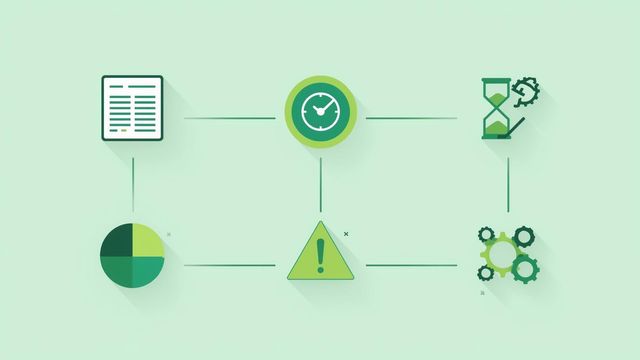
The True Cost of Manual Group Reporting (And Why Automation Pays Off)
Manual group reporting looks simple on the surface, but the hidden costs are significant. Time-consuming exports, manual mappings, currency errors and dependency on key individuals slow down the entire finance function. Automated consolidation removes this friction by standardising data, updating numbers in real time and eliminating manual work while Sumledger still provides full Excel flexibility through Sumledger EXL. The result is faster reporting, fewer errors and more time for meaningful analysis.

How to Build a Scalable Reporting Stack for Growing Groups
Build a reporting foundation around source data, shared account mapping, controlled eliminations and clear ownership as the group grows.
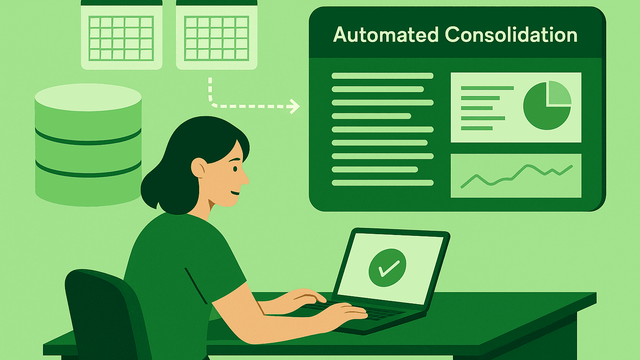
Excel vs. Consolidation Software: When Is It Time to Switch?
Use control, complexity and reporting effort to decide when Excel is sufficient and when a shared group reporting layer becomes useful.