
News
Insights for modern group finance
Articles on group reporting, cross-ERP financial control, consolidation and the development of Sumledger.

All articles
Reconciliation, mapping and eliminations: three checks
A group figure can agree with the accounting system and still be wrong in the group report. Source-data reconciliation, account mapping and eliminations answer different questions. Keeping them separate makes it easier to locate errors and document why a report is ready to use.
Late entries after group reporting sign-off
The group report has been approved. Then a subsidiary posts an invoice to the period already reported. Which version now applies, and who decides whether the report needs to be reissued?

How to Build a Scalable Reporting Stack for Growing Groups
Build a reporting foundation around source data, shared account mapping, controlled eliminations and clear ownership as the group grows.
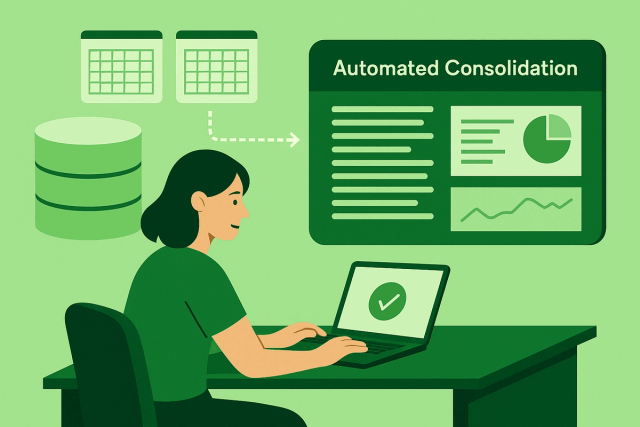
Excel vs. Consolidation Software: When Is It Time to Switch?
Use control, complexity and reporting effort to decide when Excel is sufficient and when a shared group reporting layer becomes useful.
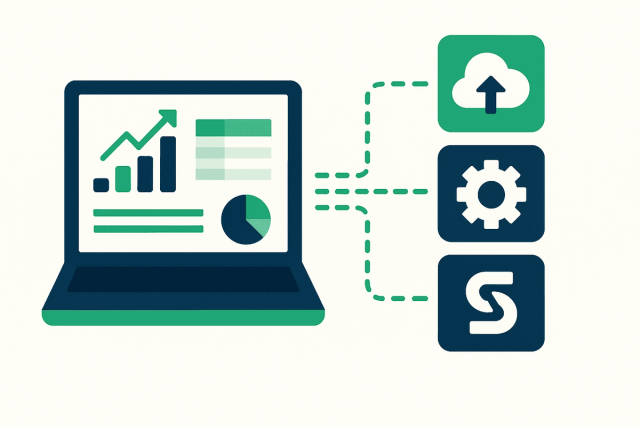
Why Multi-ERP Groups Struggle With Reporting (And How to Fix It)
A practical approach to account mapping, intercompany entries and variance analysis across different accounting systems.
From system integration to an explainable group number
Five control steps that make ERP data comparable, reconciled and explainable in group reporting.
Group finance reporting: 8 checks before sign-off
A practical CFO and controller sign-off: eight checks that make group numbers comparable, traceable and explainable.
When AI changes the ledger: two control levels
An AI suggestion can be right locally and still distort the group view. Separate local accounting control from group control.
Group reporting across countries: 7 controls
Seven practical controls that make group reporting across countries, companies and ERP systems more comparable and traceable.
Reconcile Before You Eliminate: 7 Checks
Check counterparty, amount, period, mapping and documentation before eliminating intercompany balances.
Data Flow Is Not Group Control
APIs, imports and better ERP data make reporting easier. But group logic still needs to be owned, explained and controlled by finance.
Group Finance Reporting For Private Groups
A practical guide for CFOs and controllers moving from local ERP reports and Excel to shared group control.
SAF-T Standardizes Data. Not Group Control.
SAF-T can improve accounting data structure. CFOs still need mapping, eliminations, traceability and control across entities.
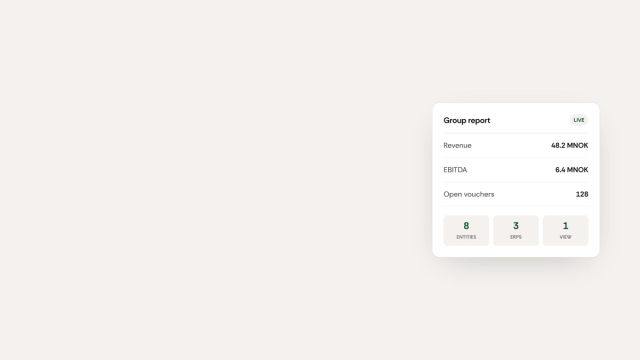
When ERP Reports Stop At The Company Boundary
Local ERP reports may be trusted inside each subsidiary. The problem starts when finance needs to explain group numbers across companies.

Welcoming Zarnab to Sumledger – Strengthening our Front-End for Modern Group Reporting
We’re excited to welcome Zarnab to Sumledger as a front-end developer, strengthening our ability to build a modern platform for group consolidation and financial reporting.
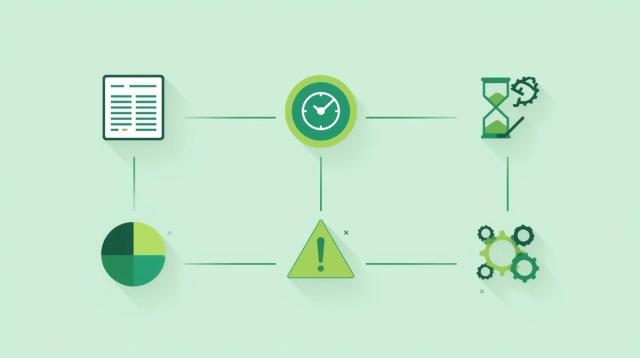
The True Cost of Manual Group Reporting (And Why Automation Pays Off)
Manual group reporting looks simple on the surface, but the hidden costs are significant. Time-consuming exports, manual mappings, currency errors and dependency on key individuals slow down the entire finance function. Automated consolidation removes this friction by standardising data, updating numbers in real time and eliminating manual work while Sumledger still provides full Excel flexibility through Sumledger EXL. The result is faster reporting, fewer errors and more time for meaningful analysis.

Big things happen when the right people join the journey
Marius Mårnes Mathiesen joins Sumledger as CTO, strengthening technical leadership and accelerating our next-generation consolidation platform.
Kravia streamlines Nordic reporting with Sumledger
Kravia, a rapidly growing player in invoice follow-up and debt collection, has chosen Sumledger as its solution for reporting and consolidation. With operations in Norway, Sweden, and Finland, Kravia now gathers data from multiple systems and countries into one flexible platform.

From Static Reports to AI-Driven Analysis: Introducing Sumledger Analyst
Group reporting is changing. For years, finance teams have been stuck between rigid reporting systems and manual Excel work. Standard reports rarely fit perfectly, and any change in structure often means more work, more maintenance, and more time spent outside the actual analysis. With Sumledger Analyst, we’re changing that.
Born Digital chooses Sumledger to unify group reporting and strengthen insights
Born Digital, a fast-growing group of IT consulting companies, has chosen Sumledger as its platform for group reporting and consolidation. The group is expanding quickly with new acquisitions, new company launches, operations in several countries and a structure with multiple co-owners. With Sumledger, they now get one place to view and manage their financial performance.

New Year. Total Control. Why Continuous Group Reporting Is the Smartest Move in 2026
The new year is the ideal time to rethink group reporting. Annual reporting shows the past, but continuous group reporting provides real-time insight, automation, and control throughout the year. With consistent structures and always-ready numbers, finance teams reduce risk, save time, and make better decisions from day one.

Another Strong Addition to Sumledger
We’re excited to welcome Øystein Walle to Sumledger as our new Full Stack Developer. Øystein joins us at an exciting stage as we continue building the next generation of group reporting and financial analysis software. He will work across both frontend and backend development, helping strengthen the platform and accelerate new functionality. Great to have you on board, Øystein.